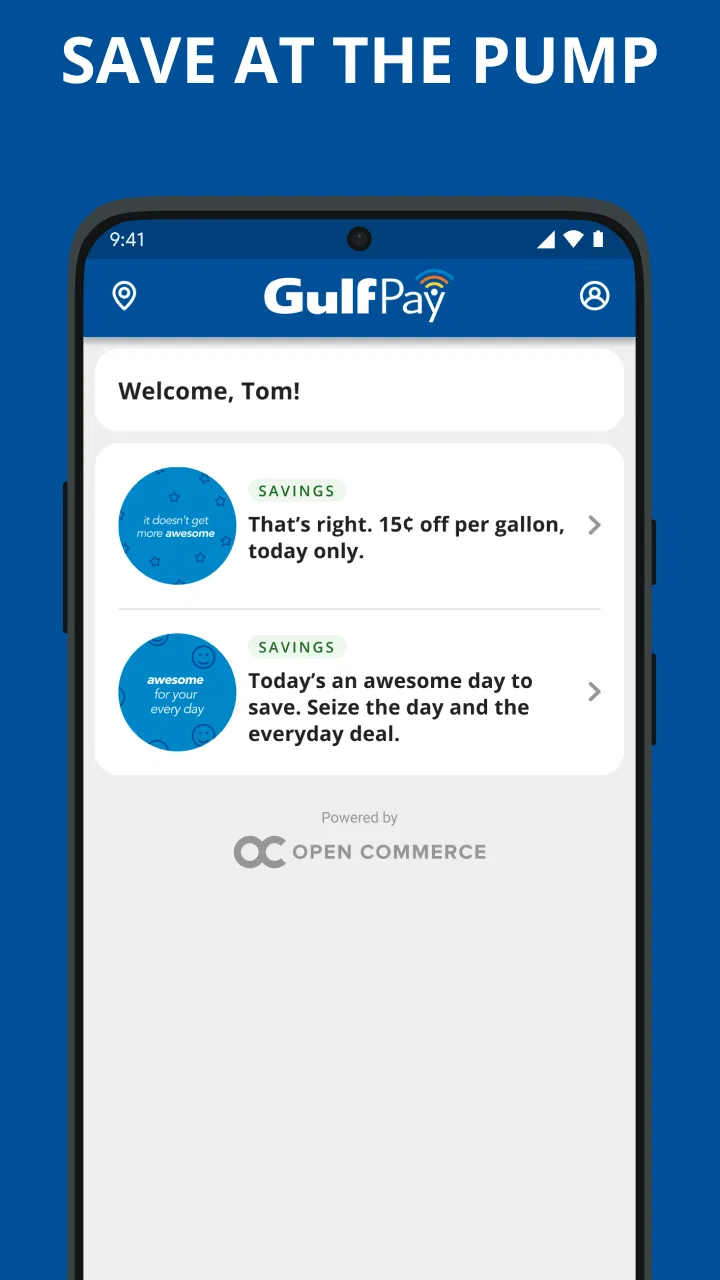
Gulf Pay
- 4.7
- Rating
- 100.00K
- Installs
- Free
- Price

 Analysis by App-foxy
Paying for fuel from a phone sounds simple, but the useful question is whether the convenience still feels sensible when money, account access, and personal data are involved. I spent time looking at Gulf Pay from that angle rather than treating it as just another payment shortcut. It is a free Auto & Vehicles app from PAR Retail, aimed at people who want to handle fuel and station purchases through their phone instead of relying entirely on the traditional counter or card-terminal routine.
My first impression is that its appeal depends heavily on how often you visit participating Gulf locations and how comfortable you are managing a payment-related account on a mobile device. The app is not interesting because it tries to do everything; its value comes from narrowing the task to a familiar driving moment and making that moment less dependent on cash, a physical card, or a queue. That focus is also its main limitation.
Where Gulf Pay fits in a fuel-payment routine
The app belongs to a practical corner of mobile software: it connects a vehicle-related errand with a phone-based purchase. Its store summary presents it as a fast, easy, secure way to buy fuel and products from a phone, but I would read that as the intended experience rather than a reason to skip basic caution. Any application involved in payment deserves a closer look at sign-in, confirmation steps, and the choices it gives you before money changes hands.
You May Also Like

 Google Keep - Notes and lists
Google Keep’s Quiet Growth Shows the Appeal of Simpler Notes
As mobile work gets busier, Google Keep keeps winning a simple contest: capture a thought quickly, find it later, and get on with the day.

 Blood Strike: 2.5 Anniversary
Blood Strike’s Loadouts Turn Every Drop Into a Tactical Gamble
A close look at Blood Strike’s custom loadouts: how fast access to signature weapons reshapes its battle royale rhythm, rewards preparation, and narrows the gap between fights.

 Pandora - Music & Podcasts
Pandora’s Music Is Easy to Start, but Harder to Recover
Pandora’s strength is its low-effort path from a seed to a station. Its weak spot is how much confidence it asks you to place in connection, setup, and quiet recovery.

 8 Ball Pool
 Is Built on Rivalries, Rematches, and Routine
A close look at the rivalries, rematches, shared routines, and unanswered safety questions that turn a quick pool match into a persistent mobile community.

 Samsung Music
’s Quiet Strength Is Playing What You Already Own
Its reach comes less from spectacle than from dependable access to a personal library. That simplicity is both the app’s strongest retention engine and its ceiling.

 AccuWeather: Weather Radar
AccuWeather Review: A Quick, Clear Forecast for Everyday Decisions
For everyday plans, the best forecast is the one you can understand quickly. AccuWeather makes rain timing, radar, and local conditions easy to act on, with a few trade-offs.
More From Our News Desk



Gulf Pay has built a solid public footprint for a focused utility. It carries a 4.8 average from around 2.5 thousand ratings, with more than 100 thousand installs. Those figures suggest that the concept is working for a meaningful group of drivers, although popularity alone cannot tell me whether the app is the right fit for your station habits or privacy expectations.
The app is free, and its content rating is Everyone, which makes it approachable for ordinary household use. It first appeared on November 9, 2022, and the current version is 26.2.999. Devices running Android 9 or newer are supported. That operating-system requirement is worth checking before planning to depend on it during a trip, especially if you keep an older phone in the car.
What I would use it for
I see the clearest use case on a rushed weekday morning. Imagine arriving at a Gulf station with a nearly empty tank, a wallet buried in a bag, and no desire to stand inside while holding up the next customer. A phone-based fuel purchase can reduce the number of objects and steps involved. You can keep your attention on the vehicle and the pump rather than switching between cash, a physical card, and a receipt.
There is also a useful distinction between occasional convenience and a complete replacement for every payment method. I would keep a backup card or another payment option available. A phone can be low on battery, a connection can be unreliable, or the station workflow may not match what you expected. Gulf Pay makes the most sense as a prepared tool in your driving routine, not as the only way you can buy fuel.
For someone who visits Gulf stations regularly, that preparation may be worthwhile. For a driver who uses several fuel brands, travels through unfamiliar areas, or rarely buys station products, the benefit is less obvious. A normal bank card remains more universal, while a general mobile wallet can be more useful across unrelated shops and transport situations. Gulf Pay earns its place when the station relationship matters more than broad payment coverage.
Trust starts with what the app lets you see
When I review a payment app, I do not treat the word “secure” as proof by itself. I look for visible moments where the user can understand what is happening: when an account is being created, what payment choice is being used, what purchase is about to be made, and whether the action can be stopped before confirmation. Those are the moments that shape trust in real life.
With Gulf Pay, I would pay particular attention to the screens surrounding account access and purchase confirmation. A good routine is to pause before approving a transaction, check that the station context and amount look right, and avoid rushing simply because the app is intended to be fast. Speed is helpful only when the important details remain readable.
I also prefer to set up a payment app before I am parked beside a pump. Creating an account, checking the available controls, and understanding how to sign out or recover access are much easier at home than with a queue behind me. This is one of the less obvious advantages of preparation: it turns a payment app from an experiment into a predictable tool.
Account controls deserve a deliberate check
Before using Gulf Pay regularly, I would inspect every account and payment setting that is visible in the app. Look for ways to review stored details, change access information, manage notifications, and remove or update a payment method if your circumstances change. I am not suggesting that a particular control exists unless you can see it; the practical point is to verify the controls yourself instead of assuming that every payment app handles them in the same way.
That check matters when a phone is shared, replaced, repaired, or lost. A driver may feel comfortable using a device at home but have a different risk profile when the phone is left in a vehicle or handed to a family member. I would use the strongest device lock available, avoid saving access details in an exposed place, and sign out when the phone is not exclusively mine.
If you change banks or replace a card, do not leave the old payment information sitting in an app simply because you no longer use it. Review the account deliberately and remove outdated details through the available settings or support route. This is basic housekeeping, but it is especially important for a fuel app because the purchase may happen quickly and repeatedly, making old information easy to overlook.
Data-sensitive moments are easy to miss
A fuel-payment app naturally handles information connected with purchases and account access. I would therefore treat installation, registration, payment setup, and support conversations as separate data-sensitive moments. At each one, read the permission or privacy prompt shown on your device and decide whether the requested access makes sense for the task you are trying to complete.
I would not grant a permission automatically just because the app is convenient. If a request appears unrelated to buying fuel or managing the account, pause and investigate it through the app’s visible explanation or the relevant system setting. If the app cannot perform a task without a permission you are not comfortable granting, that is a genuine trade-off rather than something to ignore.
The same caution applies to notifications. Payment confirmations and account alerts can be useful, but a crowded notification stream can expose more information on a lock screen than you intended. I would review notification visibility in the phone’s system settings and choose a display style that fits your situation. This is particularly sensible if passengers, coworkers, or family members can see your phone.
Location-related choices also deserve attention whenever a fuel app presents them. A station-finding or station-selection workflow may be more convenient with location access, but convenience and continuous access are not the same thing. If the operating system offers a choice between limited and ongoing access, I would select the narrowest option that still supports the task I actually want to perform.
How I would use it without surrendering control
My preferred workflow would be to install Gulf Pay from the official app source, open it at home, and explore the account screens before adding a payment method. I would check the developer name, PAR Retail, during installation, confirm that the app is compatible with my device, and avoid setting it up for the first time while driving or standing at a busy pump.
After setup, I would make one small, ordinary purchase while paying close attention to every confirmation screen. I would note whether the amount, station, and final status are easy to understand. If anything looks ambiguous, I would stop and resolve it before trying to use the app for a larger or more urgent purchase. A first test is not wasted time; it is a way to learn the app while the consequences are limited.
I would also keep records in the normal way. Check the bank account or card activity after using a new payment service, especially during the first few transactions. If the app provides an in-app history or receipt view, compare it with the financial record rather than assuming that one screen tells the whole story. This habit helps separate a completed purchase from a pending attempt or a failed authorization.
One practical tip is to avoid treating the app as a reason to use your phone carelessly near moving vehicles. Set up the purchase before the vehicle is in motion, park safely, and keep the phone away while driving. The convenience of mobile payment is not worth turning a fuel stop into a distraction.
Where it beats the usual alternatives
Compared with paying at the counter, Gulf Pay can be more comfortable when you want to minimize handling and avoid an extra indoor step. Compared with a physical card, it may reduce the need to reach for your wallet. Compared with a general mobile wallet, its advantage is its connection to the Gulf fuel-station context rather than its usefulness everywhere.
That comparison also shows when another option is better. A physical card is the safer fallback when your phone battery is low, your account is inaccessible, or the station process does not cooperate. A bank app may be preferable when your main priority is reviewing transactions and managing financial security in one familiar place. A general wallet may win if you want one payment method for fuel, groceries, transport, and other everyday purchases.
Gulf Pay is therefore not automatically the best payment tool for every driver. Its strongest case is a person who frequently uses Gulf stations, values a dedicated station experience, and is willing to maintain one more account carefully. Its weakest case is a person who wants universal acceptance or dislikes having separate apps for separate brands.
Small friction points that affect the experience
Dedicated payment apps introduce a layer of dependence that a card does not. You need a compatible phone, a working account, sufficient battery, and a payment setup that has not expired or changed. Even if each requirement is reasonable, the combined routine can feel excessive for someone who only stops for fuel once in a while.
There is also a learning cost. A first-time user must understand where to start a purchase, how to confirm it, and how to recognize a completed transaction. If those steps are not immediately clear on your device, the app can feel slower than simply tapping a card. I would judge it after the initial setup rather than after the first thirty seconds, but I would not dismiss that setup friction either.
Privacy comfort is another personal trade-off. Some people are happy to use a dedicated fuel account and review its choices; others prefer to keep payment activity inside a bank or wallet they already trust. Neither preference is irrational. Gulf Pay is a better match when its focused workflow outweighs the extra account and the need to inspect its settings.
Updates can change the feel of any payment app, so I would keep an eye on the version installed and revisit permissions or account controls after a significant update. The current release is 26.2.999, but the important habit is not memorizing a version number; it is noticing when the app changes and checking whether its visible choices still match your expectations.
Who should try it, and who should skip it
I would recommend trying Gulf Pay if you regularly fuel at Gulf stations, want a phone-centered purchase flow, and are comfortable checking account and privacy settings before relying on it. It may be especially useful for drivers who dislike carrying a wallet, need a quicker station routine, or want a dedicated way to handle fuel and station products.
I would skip it if you rarely encounter Gulf locations, already have a payment method that works smoothly everywhere you go, or do not want another account on your phone. I would also avoid making it your sole option if you frequently travel through areas with uncertain connectivity or if your phone is old enough that the Android 9 minimum requirement creates compatibility concerns.
Families and shared-device users should think carefully before setting it up. The free price and Everyone rating make the app easy to consider, but those labels do not replace sensible account boundaries. Use a personal device lock, review who can access the phone, and make sure every person using the account understands what a confirmation means before a purchase is approved.
My cautious verdict after looking beyond convenience
Gulf Pay is a focused, free fuel-payment app with a clear reason to exist. I like the idea of reducing friction at a Gulf station, and the app’s strong 4.8 average indicates that many users find the experience worthwhile. Its dedicated nature is more convincing than a vague promise to replace every payment method: it is built around a specific driving task.
Still, I would recommend it with conditions. Set it up before you need it, inspect the account and permission choices, test the confirmation flow with care, and keep a backup payment method. Those steps are not signs of distrust; they are what responsible use looks like when an app handles purchases.
My bottom line is simple: Gulf Pay is worth trying for regular Gulf customers who value a dedicated phone-based fuel routine, but it should remain a choice you control rather than a replacement for common sense or a backup card. If the app’s visible controls feel clear on your device and the station coverage fits your daily route, it can earn a practical place on your phone. If universal acceptance and minimal account management matter more, the usual card or general wallet will probably serve you better.
FAQs for Gulf Pay
01What is Gulf Pay and what features does it offer?
Gulf Pay is a mobile payment app designed for convenience at Gulf gas stations. It allows users to pay for fuel directly from their smartphones, eliminating the need to go inside the store. The app provides features such as tracking fuel expenses, locating nearby stations, and offering exclusive promotions and rewards.
02Is Gulf Pay compatible with both Android and iOS devices?
Yes, Gulf Pay is available for both Android and iOS platforms. Users can download the app from the Google Play Store for Android devices or the Apple App Store for iOS devices. It’s designed to work seamlessly across various smartphones and tablets, ensuring a smooth user experience.
03How secure is Gulf Pay for transactions?
Gulf Pay prioritizes user security by employing encryption and secure payment gateways to protect financial information. Users can set up PINs or biometric authentication for additional security. The app also has a robust privacy policy to ensure that personal data is safeguarded against unauthorized access.
04Are there any rewards or loyalty programs associated with Gulf Pay?
Yes, Gulf Pay offers a rewards program where users can earn points for every purchase made through the app. These points can be redeemed for discounts on future fuel purchases or other promotions. The app frequently updates its offers, providing users with various opportunities to save money.
05What should I do if I encounter issues while using Gulf Pay?
If you experience any issues with Gulf Pay, you can access the app’s support section for troubleshooting tips. The app offers customer support via email or a dedicated helpline. Additionally, users can check the FAQ section within the app for quick solutions to common problems.
Pros
- Easy to use interface for all users.
- Secure transactions with robust encryption.
- Supports multiple payment methods.
- Quick setup and account linking.
- Real-time payment tracking and alerts.
Cons
- Limited customer service availability.
- Occasional app crashes reported.
- Requires stable internet connection.
- Some features not available globally.
- High transaction fees for some services.

Gulf Pay
Gallery